Pine Beetle Colorado: What to Know and How to Fight Back
You live among the pines for a reason — the quiet, the shade, the mountain air. But if you’re seeing sawdust at the base of your trees, or pine needles turning a sickly red, it’s time for a wake-up call. Pine beetles are small, but the damage they cause can be massive — and fast. According to the Colorado State Forest Service, infestations can spread rapidly through stressed pine stands, especially in dry or warming climates.
A pine beetle infestation doesn’t just kill trees. It changes entire landscapes, increasing fire risk and reducing property value. And here’s the kicker: once you notice the signs, the beetles are often already well underway.
This guide isn’t about handing you a chainsaw or making you mix up bug spray in your garage. It’s about understanding how to stop pine beetles — through smart choices, early detection, and the right treatment at the right time. Whether you’re a homeowner trying to protect your trees or a land manager looking to limit spread, this is your playbook for action — without the overwhelm.
Why Stopping Pine Beetles Matters
Stopping pine beetles isn’t just about saving a single tree. These tiny invaders multiply quickly, turning one sick pine into a launching pad for dozens more. Left unchecked, a small infestation can explode into a forest-wide die-off — changing your property and your local ecosystem for years.
Here’s what’s at stake:
Infestations spread fast: Once beetles emerge from an infected tree, they seek out the next closest pine. They’re most active during the warmer months, flying in search of stressed or unprotected trees.
Dead trees increase wildfire risk: Dry, beetle-killed trees are basically matchsticks. More dead trees = more fuel.
Falling hazards: Weakened trees are prone to falling, putting homes, driveways, and trails at risk.
Property value and aesthetics take a hit: Brown, brittle trees aren’t just dangerous — they’re depressing.
Common Myths (Don’t Fall for These):
“If it’s winter, I’m safe.” Not entirely — beetles often overwinter inside the tree.
“Spraying is overkill.” Actually, prevention is far easier (and cheaper) than removal.
“If one tree’s infected, I’ll just wait and see.” That wait can cost your whole forest.
Stopping pine beetles early is your best chance at keeping the rest of your trees alive and healthy.
How to Stop Pine Beetles in Their Tracks: 6 Proven Methods
Not every tree can (or should) be saved once beetles have moved in — but you can stop the spread. The key is acting early and using the right method for the right situation. Here’s a closer look at the most effective ways to stop pine beetles in their tracks, based on real forestry science — not myths.
Solar Treatment (The Heat Method)
How it works:
Solar treatment uses the sun’s heat to kill beetles and larvae hiding inside infested logs or cut tree sections. By wrapping wood in clear plastic, internal temperatures can rise above 120°F — hot enough to stop the beetle life cycle in its tracks.

What to expect:
You’ll often hear it takes 4–6 weeks to work — but in practice, many landowners leave logs covered all season to make sure the job is done right.
How to do it right:
Use clear plastic sheeting (not black) — this traps solar energy more effectively.
Dig a shallow trench around the log pile and bury the bottom edge of the tarp. Use the leftover dirt to fully seal the perimeter.
Keep the plastic a little loose to prevent it from tearing on sharp bark or branches — too tight, and it’s more likely to puncture.
Only use duct tape to patch any holes that happen during setup or from wind or wildlife.
This method doesn’t save the tree — but it helps stop beetles from emerging and spreading to the healthy ones nearby. If you’re looking for how to stop pine beetles without chemicals, this is one of the most effective approaches when done right.
Chemical Treatments: Protective Barriers with Pine Beetle Spray
When it comes to how to stop pine beetles from attacking healthy trees, chemical sprays can be an effective line of defense — but only when used correctly and at the right time.
What they do:
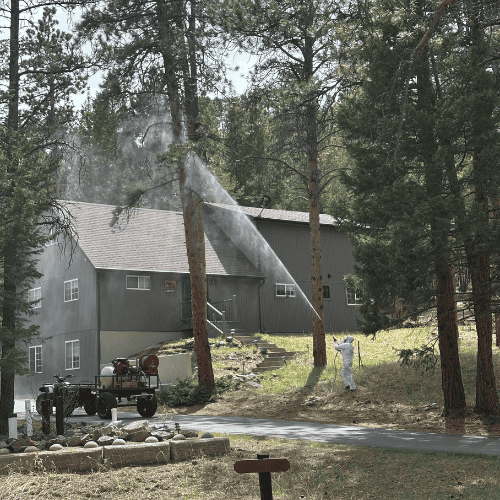
Most insecticidal sprays don’t kill beetles already inside a tree. Instead, they create a protective barrier on the bark, repelling or killing beetles that try to bore in. This makes them a preventative strategy, not a cure.
Top options used in forestry and residential settings:
Permethrin – One of the most commonly used. It’s effective, widely available, and typically provides protection for one season.
Carbaryl (Sevin XLR) – Another widely used beetle repellent. It offers similar protection to permethrin and is also used by many professional applicators.
Bifenthrin – A synthetic pyrethroid like permethrin, with some formulations showing extended protection and rain resistance.
Professional blends – Some licensed applicators use advanced mixtures or systemic products tailored to regional beetle behavior and weather patterns.
When to apply:
Spray before the beetle flight season begins — usually early to mid-spring, depending on your elevation and local weather. Reapply annually or more often if there’s heavy rainfall or visible wear on treated bark. A well-timed application can mean the difference between protecting your trees and losing them.
Safety Tips:
Always wear gloves, long sleeves, a mask, and eye protection during application.
Avoid spraying within 100 feet of streams or ponds — many of these chemicals are toxic to aquatic life.
Keep children and pets away from treated areas until the product is fully dry.
Follow all label instructions carefully, and consider hiring a licensed professional for large areas or steep terrain. For more expert guidance on treatment options, timing, and approved sprays, visit the USDA Forest Service.
Chemical sprays aren’t a silver bullet, but when timed and applied correctly, they’re a reliable way to shield your healthy trees before beetles arrive.
Burning Infested Wood (Where Permitted)
Proceed with Caution: Fire Is Final — and Risky
Burning infested trees, logs, or slash piles can be one of the most effective ways to stop pine beetles — destroying all life stages from eggs to adults. But it’s also one of the most dangerous methods if not done properly.
A serious warning:
Controlled burns carry a high risk of wildfire, especially in dry, forested areas. Without the right training, permits, and safety equipment, a small burn can quickly turn into a disaster.
Unless you’re a licensed professional or working under the guidance of one, we strongly recommend choosing safer options. Fire may leave no survivors — but it can also leave no forest.

When to use it:
Winter and early spring are ideal, especially when snow is on the ground and wildfire risk is low. This timing also ensures beetles haven’t had a chance to emerge for the next season.
Important considerations:
Check local regulations: Always verify with your county or local fire agency. Burn permits are often required, and restrictions can vary depending on drought levels or air quality alerts.
Use safe burn practices: Create a fire break, keep water or snow on hand, and never burn unattended.
Only burn what’s infested: Clean, healthy trees don’t need to be sacrificed — focus your efforts where they matter most.
Bottom line:
Burning is the gold standard when it comes to completely eliminating pine beetles — but it’s only an option where safe and legal. Always follow local rules and consider pairing with solar treatment or chipping if burning isn’t available.
Cut and Peel Method (Stop the Spread Before It Starts)
When a tree is too far gone, removal isn’t defeat — it’s defense. The cut and peel method is a time-tested way to halt beetle reproduction and protect nearby trees from becoming the next target.
When to use it:
If a pine tree is already showing signs of infestation — like reddish needles, oozing pitch, or bark that’s loose or falling off — it’s likely too late to save. Cutting it down and removing the bark exposes developing beetles to sun, air, predators, and freezing temperatures.
Why it works:
Beetles lay their eggs just under the bark. By peeling it away, you’re cutting off their protective layer — and their chance to complete the life cycle and spread to other trees. This method essentially turns the infested tree into a dead end for the beetle population. It’s one of the few ways to interrupt the beetles’ breeding process without chemicals.
What to do next:
Burn, chip, or solar treat the peeled logs to finish the job.
Don’t stack untreated wood near healthy trees — beetles can still escape if not properly handled.
If you can’t process the wood yourself, contact a local tree or pest control professional for help.
Bottom line:
Cutting and peeling is a practical, boots-on-the-ground way to stop the infestation from growing. It doesn’t save the tree — but it can save the rest of your forest.

Pheromone Traps (Verbenone Repellents)
Why it works:
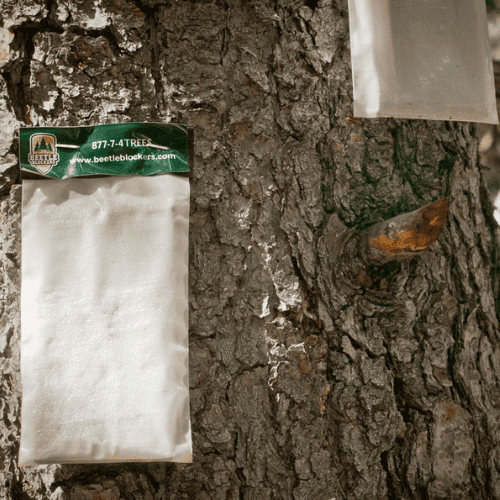
Pine beetles rely on scent signals to decide where to land. Verbenone is a synthetic version of the chemical they release when a tree is already full — like a “no vacancy” sign. By placing these pheromone pouches around healthy trees, you’re sending the beetles a strong message: move along.
When to use:
Start early — ideally before beetle flight season begins. In most mountain regions, that’s late spring to early summer.
What to expect:
Best used before beetles arrive, not after an infestation is underway.
Works as a deterrent, not a cure — it won’t eliminate beetles already inside trees.
Most effective when used in combination with permethrin sprays or tree health maintenance.
Important tips:
Don’t underdose: using too few traps per acre can make the problem worse by attracting beetles instead of repelling them.
Placement matters — consult forestry guidelines or local extension offices to determine spacing and timing.
Replace pouches annually or per product instructions for continued protection.
Bottom line:
Pheromone traps are like psychological warfare for beetles — they work by throwing off the signals that guide their attacks. On their own, they’re not enough, but as part of a layered defense, they can give your trees a much-needed advantage.
Chipping Infested Wood
Why it works:
Pine beetles live, grow, and reproduce just beneath the bark. When you feed infested logs through a wood chipper, you’re doing more than just cleaning up — you’re shredding larvae, pupae, and adult beetles in the process. This mechanical destruction leaves no survivors.
When to use:
As soon as possible after cutting down an infested tree — especially if solar treatment or burning isn’t an option. Waiting too long gives the beetles a chance to mature and fly off.
What to expect:
Chipping breaks up the bark and cambium layer where beetles hide.
It’s fast, effective, and doesn’t require weeks of solar exposure or fire permits.
It turns problem wood into usable mulch — just be smart about where you use it.
Best practices:
Don’t pile wood chips near healthy trees or forest edges — you could inadvertently create a new beetle hotspot.
Spread chips in dry, open areas where beetles are unlikely to reinfest or survive.
Wear eye and ear protection when operating a chipper — safety first.
Bottom line:
If you’ve got a chipper or can hire someone with one, this is one of the quickest ways to neutralize infested trees. Just don’t leave the chips too close to the rest of your trees — think of it as cleanup with caution.

How to Keep Pine Beetles Away: Simple Steps for Long-Term Tree Health
Stopping beetles isn’t just about reacting — it’s about making your trees less inviting in the first place. Healthy, well-managed trees are far more resistant to attack, and simple changes to your property can make a big difference in the long run.
Avoid Stacking Firewood Near Trees
Pine beetles love firewood. A neatly stacked pile of fresh logs next to your favorite pine tree might as well be a welcome sign.
Why it’s risky: Freshly cut wood gives off scents that attract beetles. If they’re already in the area, a firewood stack can serve as their next breeding ground.
What to do instead: Store firewood at least 30 feet away from any standing trees — and never leave it unprocessed. Solar wrap, chip, or burn it before beetle season starts. If it’s infested, it can spread the problem fast.
Tree Health Maintenance
A stressed tree is a vulnerable tree. Beetles zero in on weak pines because they’re easier to invade — and less likely to fight back.
Water in dry seasons: Drought is one of the biggest beetle enablers. A simple irrigation plan during hot summers can keep trees resilient.
Thin crowded stands: When too many trees compete for sunlight and water, they all suffer. Thinning allows your healthiest trees to thrive.
Remove deadwood: Dead or dying limbs attract pests and can serve as beetle entry points. Clean up fallen branches and prune when needed
How to Know When It’s Time to Act
Even the best prevention plan needs timely action. But how do you know when your trees are at risk — or when it’s too late to save one?
Visual Warning Signs to Watch For
Early detection can mean the difference between saving a tree and losing a whole stand. Keep an eye out for:
Reddish or yellowing needles starting from the top of the tree downward
Sawdust at the base of the tree or in bark crevices
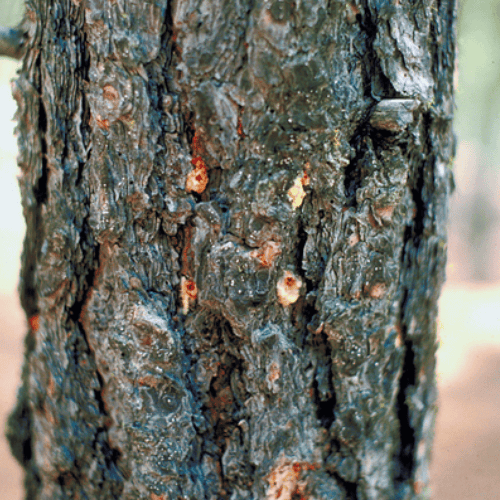
Pitch tubes — small clumps of resin where beetles bore in
Tunneling under the bark, visible if bark is loose or peeling
These signs often mean beetles are active now — not just “maybe later.”

Seasonal Timing: When to Take Action
Pine beetles are most active during their flight season, which usually runs from late spring to early fall, depending on your elevation and regional climate. Ideally, you’ll:
Spray preventatives before the first flight
Remove or treat infested trees before winter, so beetles don’t overwinter and reemerge stronger next season
When to Call a Professional
Some situations call for more than a shovel or spray bottle. Call in a licensed tree or pest control specialist if:
You see signs of widespread infestation
You’re dealing with difficult terrain or multiple acres
You want a formal health assessment of your trees
You need help with permitted burning or solar wrapping large piles
Professionals can help you act faster, safer, and more effectively — especially if you’re managing more than a backyard or two.
Take Action (Without the Chainsaw)
Stopping pine beetles doesn’t always mean grabbing a chainsaw or spraying chemicals yourself. In fact, the most powerful action you can take might be starting a conversation — with your neighbor, your HOA, or your local forestry office.
Awareness is Action
Simply knowing what to look for, when to act, and what not to do (like stacking infested wood near healthy trees) makes a huge difference. Pine beetles spread fast — but so does information.
Share what you’ve learned with neighbors and local groups.
Coordinate watch efforts during beetle flight season.
Encourage others to report and remove infested trees quickly.
You’re Not in This Alone
If managing trees on your land feels overwhelming, that’s normal. These infestations are a community problem, not just a personal one. And many solutions — from spraying to solar-wrapping — work better when multiple properties participate.
What Counts Is the Step You Take
You don’t need to treat every tree yourself. You just need to take the next smart step — whether that’s calling in help, wrapping a log pile, or simply walking your land with new eyes.
Let’s Protect Your Trees — Starting Today
Pine beetles don’t wait, and neither should we. Whether you’re caring for a few trees or a forested property, taking smart, timely action makes all the difference. You don’t need to tackle everything yourself — just knowing your options puts you a step ahead.
Thanks for reading — and for caring about your trees.
Dealing with pine beetles isn’t easy, but being informed is the first step in protecting the forested places we love. Whether you’re a homeowner with a few backyard pines or managing acres of mountain property, every action — big or small — makes a difference in stopping the spread.
If you have questions, need help figuring out your next step, or just want to share your own beetle story, I’d love to hear from you. Visit the Contact page to get in touch. Whether it’s a quick question or a long-time concern, you’re not alone in this.
This site is here to educate, support, and connect folks across beetle-prone regions. When we share knowledge and experiences, we make smarter decisions — and we stand a better chance at preserving the trees that define our landscapes and protect our homes.
Let’s keep our forests strong, one tree at a time.
And again, thanks for stopping by.